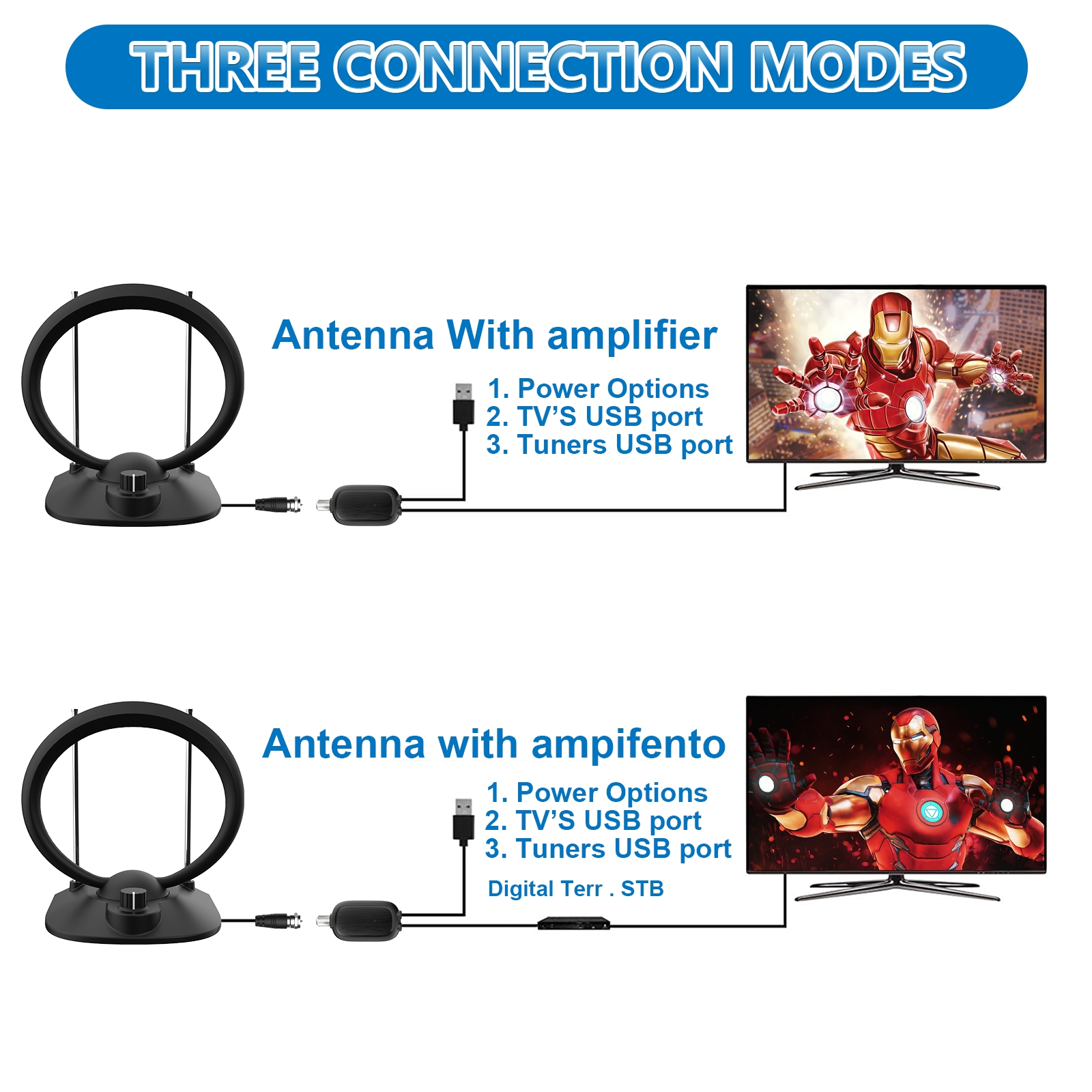
ATSC 3.0 — marketed to consumers as NextGen TV — was supposed to be the future of broadcast television by now. 4K resolution, immersive audio, interactive content, better indoor reception. Instead, a decade after the standard was finalized and seven years after the first stations began broadcasting, ATSC 3.0 is trapped in a three-way regulatory and commercial standoff: the FCC cannot decide whether broadcasters can encrypt free television signals, television manufacturers will not include ATSC 3.0 tuners without consumer demand, and consumers will not demand ATSC 3.0 until it offers something ATSC 1.0 does not. With the July 2027 simulcast sunset deadline approaching, the clock is running out on the transition that was supposed to revitalize broadcast television.
ATSC 3.0 Status Report — July 202690+ — US markets with ATSC 3.0 broadcasts on air
July 17, 2027 — ATSC 1.0 simulcast requirement sunset date (FCC extended)
February 2026 — DRM opponents coalition formally submitted comments to FCC
August 2025 — Brazil adopted ATSC 3.0 as DTV+, first major international deployment
0 — Number of FCC final rulings on ATSC 3.0 DRM encryption as of July 2026
CES 2026 — NextGen TV tuners shown by manufacturers, but no regulatory mandate
The Encryption Deadlock: Can Broadcasters Lock Free TV Behind a Paywall?
At the center of the ATSC 3.0 regulatory paralysis is a single question that gets to the heart of what "free television" means: should broadcasters be allowed to encrypt their ATSC 3.0 signals using digital rights management, requiring an internet-connected tuner to negotiate a decryption key before the consumer can watch?
The Federal Communications Commission has been formally weighing this question since reopening public comments in late 2025, with a deadline of January 20, 2026. The proceeding has generated fierce, polarized responses, and as of late July 2026, the Commission has issued no final ruling. The uncertainty is itself a policy outcome — broadcasters, manufacturers, and consumers are all operating in a regulatory vacuum, making investment and purchasing decisions without knowing what the rules will be.
The broadcaster position, articulated by the National Association of Broadcasters and individual station groups, is that DRM encryption is necessary to protect their content from unauthorized redistribution, to satisfy licensing requirements from major sports leagues and Hollywood studioses, and to enable new business models — premium 4K channels, pay-per-view events, targeted advertising — that could make broadcast television economically viable in the streaming era. Without DRM, the argument goes, broadcasters cannot secure the premium content that would differentiate ATSC 3.0 from ATSC 1.0 and give consumers a reason to upgrade.
The consumer and public interest position, led by technology advocate Lon Seidman's Lon.TV channel, the American Television Alliance, and a coalition that filed formal comments in February 2026, is that DRM fundamentally breaks the social contract of free over-the-air television. If a consumer needs an active internet connection, a compatible tuner that supports the encryption scheme, and a successful decryption key negotiation to watch a broadcast signal, then that signal is no longer "free TV" in any meaningful sense. The critics point to DRM implementations already deployed in some markets — where encrypted ATSC 3.0 signals require internet-connected tuners to decode — as evidence that the broadcast industry is building the infrastructure for a paid, authenticated future while the FCC deliberates.
The A3SA — the ATSC 3.0 Security Authority, the industry body that manages the encryption program — sits at the center of the controversy. Critics argue the A3SA is dominated by broadcast industry interests and lacks sufficient consumer representation. The group's encryption requirements have been criticized as overly restrictive, requiring hardware-level security that limits which devices can decode protected signals and creating a certification bottleneck that slows the introduction of new ATSC 3.0 tuner products.
ATSC President Madeleine Noland has clarified to the Commission that the ATSC 3.0 standard itself does not require broadcasters to encrypt signals or use any specific DRM system. The encryption push is a broadcaster business decision, not a technical mandate of the standard. This distinction is important: the Commission could restrict DRM without undermining the ATSC 3.0 technical standard itself, leaving broadcasters free to deploy the standard without the encryption layer that consumer advocates oppose.
The 2027 Simulcast Sunset: What Happens When ATSC 1.0 Goes Dark?
Compounding the encryption uncertainty is a hard regulatory deadline. The FCC requires every ATSC 3.0 broadcaster to simultaneously transmit an ATSC 1.0 signal — a simulcast arrangement that ensures consumers with older televisions and existing Antennas can continue receiving free broadcasts. This requirement was extended to July 17, 2027, and the FCC has indicated it will not extend it again without a clear plan for consumer protection during and after the transition.
If the simulcast requirement expires in July 2027 without a resolution to the tuner availability and encryption questions, millions of Americans who rely on free over-the-air television — including those who recently purchased indoor Antennas specifically to receive ATSC 1.0 signals — could find their televisions unable to display broadcast content. The transition from the 2009 analog-to-digital switchover was managed with a government-subsidized converter box program that distributed millions of free tuners to affected households. No equivalent program exists for ATSC 3.0, and the political appetite for one in the current budget environment is minimal.
The NAB has urged the FCC to establish clear, market-driven adoption metrics that must be met before any ATSC 3.0 tuner mandate or ATSC 1.0 sunset is triggered. The Consumer Technology Association, representing television manufacturers, argues that manufacturers are already innovating — CES 2026 featured multiple NextGen TV tuner products — and that a regulatory mandate is unnecessary and potentially counterproductive. The CTA's position, filed with the FCC in January 2026, is that the market, not the government, should determine when and how ATSC 3.0 tuners are adopted.
The result is a classic chicken-and-egg problem. Manufacturers will not invest in ATSC 3.0 tuners at scale without consumer demand. Consumers will not demand ATSC 3.0 without compelling content that justifies an equipment upgrade — and without a clear regulatory framework that assures them their investment will not be undermined by future encryption or sunset decisions. Broadcasters will not invest in premium ATSC 3.0 content without a large installed base of compatible tuners and a regulatory environment that protects their ability to monetize that content. Every party is waiting for every other party to move first.
"ATSC 3.0 is technically brilliant. It can do things ATSC 1.0 never could. But the regulatory framework for getting it into consumers' living rooms is broken, and nobody in Washington seems able to fix it."
The Brazil Factor: International Momentum When the US Stalls
While the United States regulatory process grinds forward without resolution, Brazil has moved decisively. In August 2025, Brazil formally adopted ATSC 3.0 technologies as the foundation for its next-generation broadcast system, branded DTV+ (also known as TV 3.0). This is not a peripheral development — Brazil is the largest broadcast market in Latin America, with over 70 million television households and a vibrant free-to-air broadcast culture. The country's decision to build its digital future on ATSC 3.0 represents the most significant international validation of the standard since its initial adoption in the United States and South Korea.
Brazil's implementation choices — including its approach to encryption, tuner mandates, and the transition timeline from its current ISDB-T standard — will be closely watched by other countries evalsuating next-generation broadcast standards. If Brazil deploys ATSC 3.0 without the DRM restrictions that have generated controversy in the United States, it will strengthen the argument that encryption is a broadcaster choice, not a technical necessity. If Brazil follows the US encryption model, it will add international precedent to the broadcasters' position that DRM is essential to the standard's economic viability. Brazil's DTV+ rollout is still in its early stages — the August 2025 adoption was a policy decision, with technical deployment to follow over the coming years — but its significance as a real-world test case for ATSC 3.0 outside the US regulatory environment is hard to overstate.
The international dimension matters because ATSC 3.0 is competing with alternative next-generation broadcast standards — particularly DVB-I in Europe and advanced versions of ISDB-T in parts of Asia and Latin America — for global adoption. Every country that chooses ATSC 3.0 expands the addressable market for compatible receivers and chipsets, driving down component costs through economies of scale. The US regulatory stalemate, by slowing domestic adoption, undermines the standard's global competitiveness. Brazil's decision to move forward despite the US uncertainty is a bet that the technology is sound even if the regulatory framework is not yet settled.
What the DRM Debate Means for Antenna Users — and the Antenna Industry
For the millions of consumers who have purchased indoor or outdoor TV Antennas in recent years — driven by cord-cutting, streaming fatigue, and major sports events — the ATSC 3.0 regulatory outcome has direct, practical consequences. An unencrypted ATSC 3.0 deployment would deliver 4K broadcasts, more robust indoor reception, and interactive features to any antenna user with a compatible tuner — providing a genuine upgrade path from ATSC 1.0 at the cost of a new tuner or television. An encrypted deployment, by contrast, would require not just a compatible tuner but an active internet connection for authentication — degrading the antenna's core value proposition of independence from internet infrastructure.
For the antenna manufacturing industry, the regulatory uncertainty creates a difficult product planning environment. Antennas are resolution-agnostic and standard-agnostic — any VHF/UHF antenna receives ATSC 3.0 signals exactly as it receives ATSC 1.0. But the market for antennas depends on the value proposition of over-the-air television as a whole. If ATSC 3.0 makes free TV better — better picture, better reception, better features — antenna demand grows. If ATSC 3.0 makes free TV worse — more complicated, requiring internet authentication, subject to content restrictions — antenna demand contracts. The industry has a direct financial stake in the FCC's encryption decision, even though antennas themselves require no modification for ATSC 3.0.
The Path Forward: Scenarioses for the Next 12 Months
Several potential outcomes are possible between now and the July 2027 simulcast sunset deadline.
Scenario 1 — The FCC acts. The Commission issues a ruling on DRM encryption that either permits unrestricted broadcaster encryption, restricts it to specific circumstances (such as premium content not simulcast on ATSC 1.0), or prohibits it entirely on primary broadcast channels. A clear ruling, in any direction, would resolve the largest single uncertainty in the ATSC 3.0 ecosystem and allow manufacturers, broadcasters, and consumers to make decisions with known rules. The most likely window for a Commission action is late 2026, giving the industry at least six months to prepare before the simulcast sunset.
Scenario 2 — The sunset is extended again. The FCC extends the July 2027 simulcast deadline, buying more time for tuner adoption and regulatory resolution but also signaling that the transition has no credible endpoint. An extension would relieve immediate pressure but deepen the uncertainty that has characterized the ATSC 3.0 rollout from the beginning.
Scenario 3 — The market resolves what regulation cannot. Television manufacturers begin including ATSC 3.0 tuners voluntarily — as several have indicated at CES 2026 — and consumer adoption reaches a critical mass that makes regulatory intervention less urgent. This market-driven path is the CTA's preferred outcome, but it depends on broadcasters offering compelling ATSC 3.0 content that justifies the tuner cost, which in turn depends on the regulatory environment that is currently unresolved. The circularity of these dependencies is precisely why the regulatory process exists in the first place.
Scenario 4 — ATSC 3.0 becomes a niche standard. The regulatory stalemate persists. Manufacturers include ATSC 3.0 tuners only in premium television models. Broadcasters invest minimally in ATSC 3.0 content. Consumer awareness remains low. And ATSC 1.0 — the standard designed in the 1990s — continues as the de facto broadcast standard for the majority of American households well into the 2030s. This is not a worst-case scenario from a technical perspective — ATSC 1.0 works reliably and is universally supported — but it would represent a failure of the regulatory process to shepherd a transition that nearly every stakeholder agrees is technically desirable.
The Bottom Line
ATSC 3.0 is a technically superior broadcast standard that has been deployed in over 90 US markets, adopted internationally by Brazil, and endorsed by virtually every major stakeholder in the television industry. It is also, as of July 2026, a standard without a clear regulatory framework, a standard whose most controversial feature — DRM encryption — remains unresolved at the Commission level, and a standard whose transition deadline is approaching without a plan for what happens when it arrives. The FCC has the authority to resolve the encryption question, to clarify the transition timeline, and to break the chicken-and-egg adoption cycle. What it does not have, as the July 2027 deadline approaches, is unlimited time.

 Español
 Portugues
 Pусский
 Français
 Deutsch
 日本語
日本語
 한국어
한국어
 العربية
 Italiano
 Nederlands
 Ελληνικά
 Svenska
 Polski
 ไทย
ไทย
 Türk dili
 हिन्दी
 Indonesia
 Melayu
 Tiếng Việt
 中文
中文
 dansk
dansk
 Magyar
 қазақ
қазақ
 বাংলা
বাংলা
 עִברִית
 čeština
 Soomaali
 မြန်မာ
 فارسی
فارسی
 українська
 norsk
norsk
 Gaeilge
 беларускі
 Română
 ພາສາລາວ
 Filipino
 lietuvių
 Cymraeg
 македонски
 Suomalainen
 slovenský
 o'zbek
 اردو
اردو
 հայերեն
 Igbo
Igbo
 български
 سنڌي
سنڌي
 Shona
Shona
 සිංහල
සිංහල
 Hrvatski
 íslenskur
 galego
 català
 Zulu South Africa
 Afrikaans isiXhosa
 ಕನ್ನಡ
ಕನ್ನಡ
 lëtzebuergesch
 Indonésia Sunda
 Кыргызча
 тоҷикӣ
 Србија
 Twi
Twi
 Hawaii
 Cebu
Cebu
 नेपाल
नेपाल
 euskara
 frissi
 יידיש
יידיש
 latvija
 slovenija
 kiswahili
 ਪੰਜਾਬ
ਪੰਜਾਬ
 پښتو
پښتو
 საქართველოს
 hua moni
 bosna
bosna
 Kreyòl ayisyen
 Eesti
Eesti
 Gàidhlig na h-Alba
 Samoa
Samoa
 Монгол
 Azərbaycan
 አማራ
አማራ
 Shqipëria
 Malagasy
 Malta
Malta
 ខ្មែរ
ខ្មែរ
 Chicheva
 中文(繁體)
 ଓଡିଆ
ଓଡିଆ
 Setswana
 Afrikaans
 Aymara
 Башҡорт
 Türkmenler
 ትግሪኛ
ትግሪኛ
 Afaan Oromoo
 অসমীয়া
 Kinyarwanda
 Ilocano
 Wolof
Wolof
 अवधी
अवधी
 Oluganda
 Bikol
Bikol
 Fulɓe
Fulɓe
 Kikongo
 Sango
Sango
 ދިވެހި
 Lingala
 मैथिली
 Tsonga
 ꯃꯦꯏ ꯊꯥꯏ꯫
 brezhoneg
 Furlan
 नेवा
नेवा
 རྫོང་ཁ
 Santali
 Аҧсуа
Аҧсуа
 Нохчийн
 Чӑваш
Чӑваш
 Татар
Татар
 Batak Karo
 دری
دری
 Diura
Diura
 Fengyu
 Eʋegbe
 Iban
Iban
 Fiji
Fiji
 Tonga
Tonga
 Inuktitut
 Nahuatl
 maaya yucatec
 Runasimi
 guarani
 Qafar
Qafar
 Acholi
 Dinka
Dinka
 Luo
Luo
 Lundi
Lundi
 isiNdebele
 Tshivenḓa
 Sesotho sa Leboa
 Sesotho sa Borwa
 Ndumbe
 Papuan Pidgin
 Rromani ćhib
 Thok Nath





 WhatsApp
 phones
Comment
(0)